How-to-think-in-English---Improve-your-E
https://m.youtube.com/watch?v=DlJ8yUKLk_k&pp=ugUEEgJlbg%3D%3D
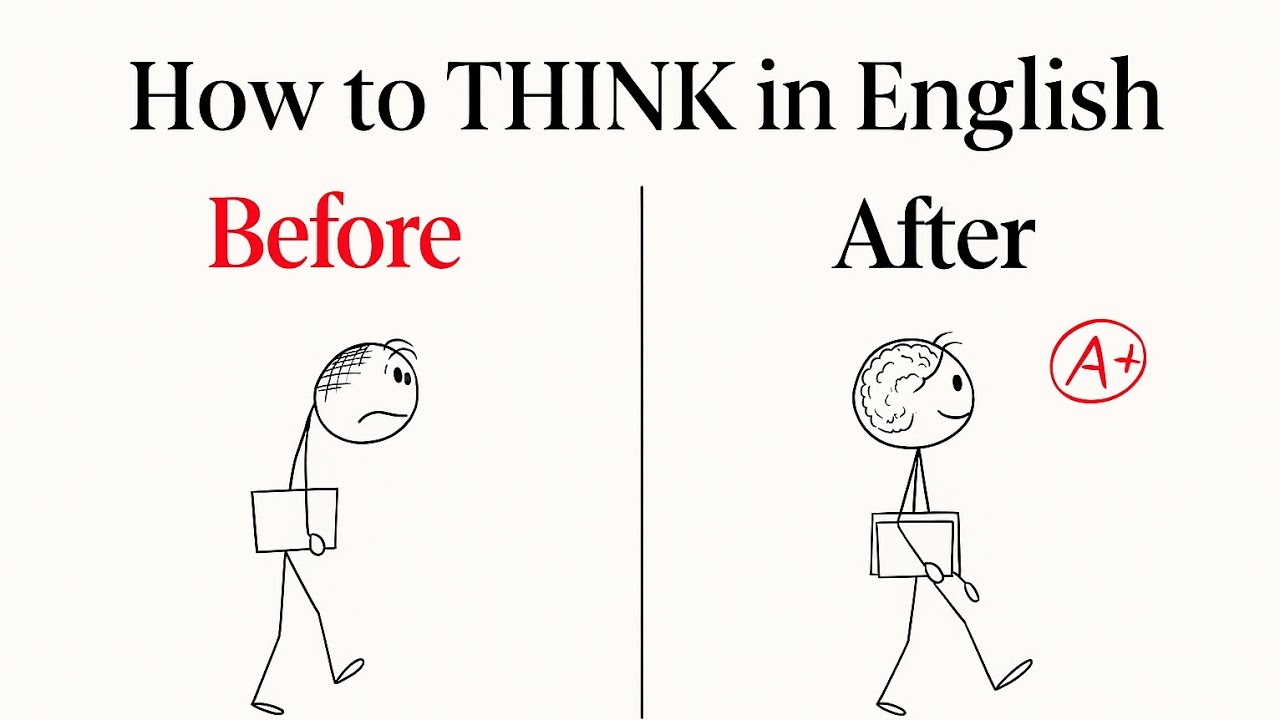
Have you ever wondered why it feels so hard to think in English, even after learning so many words and grammar rules? You may be able to read English, write in English, and even understand others when they speak. But when it comes to forming your own thoughts in English, it suddenly feels like a big wall stands in your way. This is because most learners don't actually practice the skill of thinking in English. They practice reading, writing, listening, and speaking. but their brain is still translating every word from their native language into English. The real secret to fluency is not just learning English words, but actually training your mind to think in English directly. So how can you do this? It begins with the small things. Your inner voice, the voice inside your head that speaks to you every day, can slowly be trained to use English. For example, when you wake up in the morning, instead of saying to yourself, I need to brush my teeth, in your own language, say it in English, I need to brush my teeth. If you are walking to school or work, describe what you see around you in English. Tell yourself, the sun is bright today, or that car is moving fast. At first, these sentences might feel slow or even unnatural but the more you practice this kind of inner talk the more automatic it becomes Eventually your brain will begin to think in English without needing to translate Another powerful method is surrounding yourself with English sounds and words as much as possible. Your brain is like a sponge. The more English you hear, the easier it becomes to think in it. Instead of only studying English during a short lesson, make it part of your lifestyle. Watch TV shows. Listen to podcasts. Don't worry if you don't understand everything at first. The important thing is that your ears and your brain are getting used to the rhythm, tone, and natural flow of the language. Over time, those sounds become familiar and your brain begins to produce them on its own. Now here's something interesting. Thinking in English is not just about language. It's also about culture and habits of expression. Every language has a certain way of organizing thoughts. For example, in English, people tend to keep sentences short and direct. If you always try to think in long and complicated sentences from your native language, you will struggle to translate them. Instead, start practicing shorter, simpler sentences in English. Imagine you are texting a friend. English thinking is often like that, straight to the point. Instead of saying in your native language, I feel very exhausted because I had a long day full of responsibilities, in English you might think, I'm so tired. Today was a long day That clear natural and fast One more important part of thinking in English is to lower your fear of mistakes Many learners stop themselves from thinking in English because they are worried about grammar But thinking is private. No one else can hear your thoughts. This is your safe space. Even if your sentence in your head is not perfect, it doesn't matter. What matters is training your brain to move in English without stopping. With time, your mistakes will reduce naturally because your brain will get better at choosing the right words and grammar patterns. To make this habit stronger, you can also practice speaking to yourself in English when you are alone. Some people feel shy about this, but it is one of the best ways to train your brain. For example, if you are cooking, describe what you are doing. I'm cutting the vegetables. Now I'm adding salt. The food smells good. If you are driving or walking, you can say, I see children playing. The weather feels cold today. These little sentences may feel simple, but they are actually very powerful because they help connect your daily life with English thought. Visualization is another tool that can help. When you learn a new word, don't just connect it to a translation in your native language. Connect it directly to an image in your mind. For example, when you learn the word apple, imagine a shiny red apple. When you learn the word happiness, imagine a big smile on someone's face. This way your brain will not waste time translating from your native language It will connect English words directly to meaning which makes thinking in English much faster Immersion is also key. If possible, try to create situations where English is the only option. Change the language on your phone to English. Write your shopping list in English. Send short messages to yourself in English. Even if it feels strange at first, it is pushing your brain to get comfortable with English in daily life. Remember, thinking in English is not something that happens in one day. It is a skill, and like any skill, it grows with practice. Finally, let's think about the reward. Why should you put so much effort into thinking in English? Because once you reach that stage, everything becomes easier. You will speak faster, understand more clearly, and feel more confident. it. You won't spend so much time translating in your head. Instead, you will live inside the language. That's when English stops being just a subject you study, it starts becoming the tool you use naturally. So the next time you catch yourself translating in your head, pause and try to form the thought directly in English. Start small, be patient, and keep practicing. With time, your brain will adjust, and one day, without even realizing it, you'll discover that your natural way of thinking is in English. And when that happens, you'll feel a new kind of freedom in your learning journey. Take care of yourself.